Solid-State Circuit Breakers: Protection at Electronic Speed
09 Dec 2025
Fundamentally Changing how Quickly Systems can Respond to Dangerous Conditions
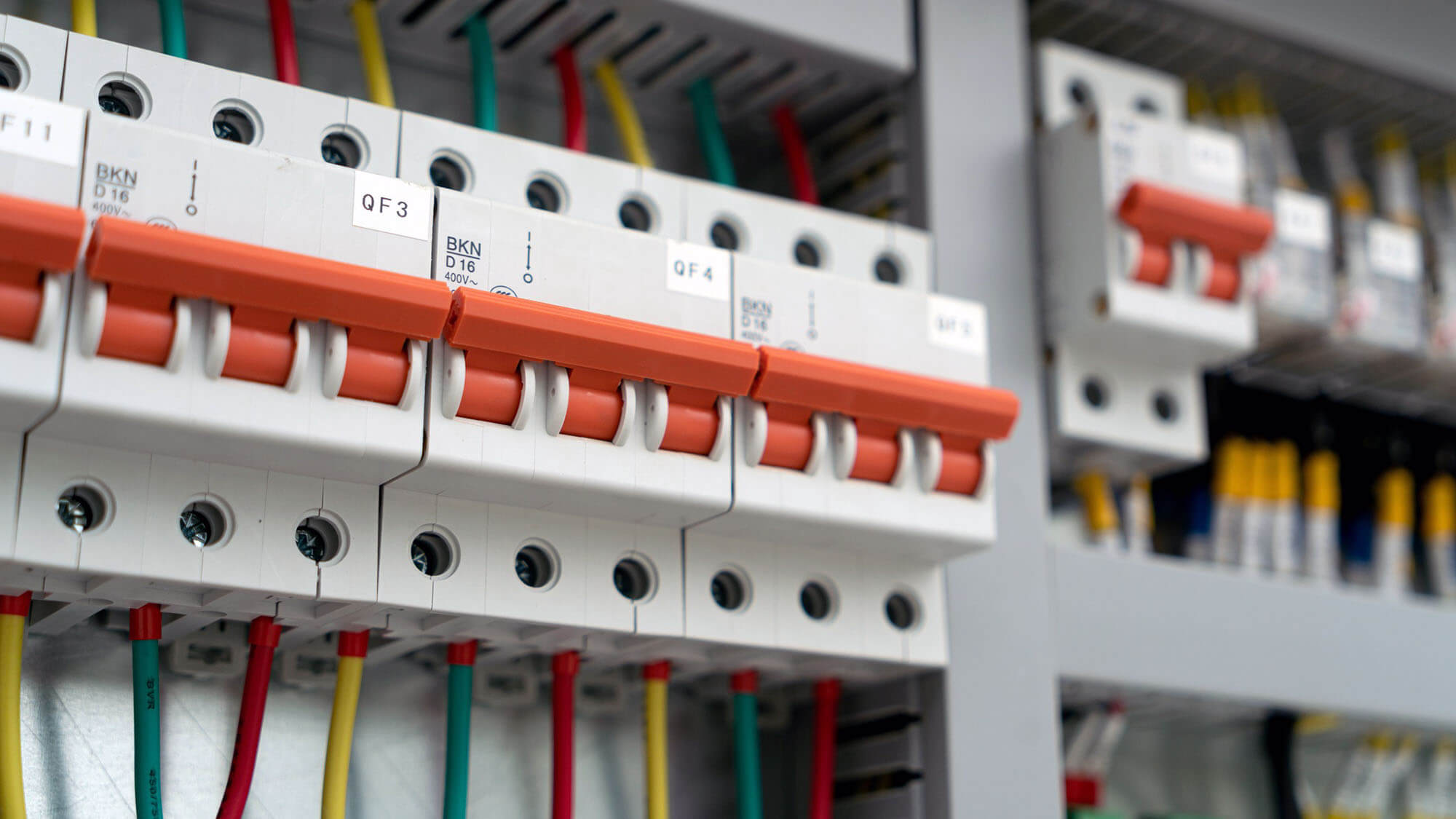
Traditional circuit breakers have protected electrical systems for decades by physically separating contacts to interrupt fault currents. But what if circuit protection could happen thousands of times faster, with hardly any arcing, no contact wear, and integration with smart building systems? That's the promise of solid-state circuit breakers (SSCBs).
Speed Changes Everything
Conventional circuit breakers interrupt faults in 5-50 milliseconds. Solid-state circuit breakers do it in microseconds, often under 1 millisecond. This isn't just an incremental improvement; it's a fundamental change in how quickly systems can respond to dangerous conditions.
When fault currents can reach tens of thousands of amperes almost instantaneously, microseconds matter. Faster interruption means less fault energy, reduced equipment damage, and significantly lower arc flash hazards.
How They Work
An SSCB uses power semiconductor devices to interrupt electrical current flow, rather than the mechanical contacts found in traditional breakers. When a fault condition such as overcurrent or short circuit is detected by monitoring a circuit, the control system rapidly switches off the semiconductor devices (typically within microseconds), creating an open circuit that stops current flow. Unlike mechanical breakers that rely on physical contact separation and arc extinction, SSCBs have no moving parts, enabling faster response times, longer operational life, and the ability to interrupt faults thousands of times without degradation. The semiconductor switches conduct current during normal operation with minimal voltage drop, and when switched off, they block voltage across their terminals while control circuits manage the safe dissipation of any stored energy in the circuit's inductance.
The Compelling Benefits
- Ultra-Fast Protection Sub-millisecond interruption limits fault energy before damage occurs, protecting downstream equipment and significantly reducing arc flash hazards.
- No Arcing Eliminating the arc means no fire risk, no contact erosion, and no need for arc chutes or quenching chambers.
- Unlimited Cycles Mechanical breakers wear with every operation. SSCBs can switch millions of times without degradation, making them ideal for frequent switching applications.
- Precise Current Limiting SSCBs can limit fault current to specific levels, protecting sensitive equipment while maintaining selective coordination.
- Digital Integration Built-in monitoring, communication capabilities, and programmable trip characteristics make SSCBs ideal for smart buildings and Industry 4.0 applications.
- Consistent Performance Unlike mechanical breakers affected by temperature, contact condition, and environmental factors, SSCBs operate predictably across all conditions.
Applications Leading Adoption
Solid-state circuit breakers are already making an impact in applications where their unique capabilities justify the premium:
- Data centers where even momentary outages are unacceptable and arc flash reduction is critical
- Photovoltaic systems requiring rapid DC fault interruption that mechanical breakers struggle with
- Marine and aerospace where weight savings, reliability, and arc suppression are essential
- Industrial automation benefiting from reduced downtime and maintenance-free operation
- Electric vehicle charging protecting sensitive power electronics with fast, precise interruption
Challenges Under Development
SSCBs face real obstacles that the industry is actively addressing:
- Cost Premium: Semiconductor-based protection costs 5-10 times more than conventional breakers initially. However, maintenance savings, reduced downtime, and enhanced safety often justify the investment in critical applications.
- Thermal Management: Semiconductors in the conduction path generate heat continuously. Effective cooling systems add size and complexity, though wide-bandgap semiconductors are reducing losses.
- Voltage and Current Ratings: Most commercial SSCBs serve low and medium-voltage applications. High-voltage, high-current ratings remain challenging, though hybrid breakers (combining solid-state and mechanical technologies) are extending capabilities.
- Standardization: Testing laboratories and standards organizations are developing appropriate evaluation criteria. Existing standards were written for mechanical devices and don't fully address solid-state characteristics.
- Market Familiarity: Electrical contractors and facility managers have decades of experience with conventional breakers. Education and proven field performance are building confidence in solid-state alternatives.
The Market Evolution
Several trends are driving SSCB adoption:
- Arc flash safety regulations making ultra-fast interruption increasingly valuable
- Smart building requirements favoring digitally integrated protection devices
- Renewable energy growth creating demand for DC protection capabilities
- Total cost of ownership analysis revealing lifecycle value despite higher upfront costs
Is It Time to Specify SSCBs?
- Consider solid-state circuit breakers when:
- Arc flash hazards are a significant safety concern
- Frequent switching or control applications exceed mechanical breaker lifecycles
- DC protection is required for solar, battery, or EV charging systems
- Digital integration with building management systems provides value
- Equipment being protected is critical or sensitive to fault energy
- Space and weight constraints favor compact protection solutions
Traditional circuit breakers will remain the standard for most applications—they're proven, economical, and entirely adequate for conventional protection needs. But for applications demanding ultimate speed, zero maintenance, or digital intelligence, solid-state circuit breakers represent a genuine leap forward.
Protection at the speed of electronics isn't just faster—it's fundamentally safer, smarter, and more capable. As costs decline and standards mature, the solid-state future of circuit protection is arriving faster than you might think.

You may be interested in...
Power Transmission and Distribution Solutions
Powerful testing, certification and advisory solutions for the grid-connected experience and related equipment.