Flexible, compliant stability studies for pharmaceutical drug substances or drug products, from early development to commercialisation, supporting real-time, accelerated stability testing, and forced degradation studies with efficient study management.
Pharmaceutical stability testing is conducted to ensure the quality of a pharmaceutical product during its storage and to assign an appropriate shelf life. At Intertek, we have over 30 years of experience in delivering efficiently managed Good Manufacturing Practice (GMP) ICH Q1A(R2) compliant stability studies from our global storage and testing network that includes integrated ICH stability storage and analytical testing.
What is ICH Stability Testing?
ICH stability testing is an essential part of drug product development supporting IND/NDA submission activities. The aim of a stability study is to drive an understanding of the chemical and physical factors that impact product safety and efficacy. Chemical degradation of drugs such as oxidation-mediated degradation in a solid-state drug, often follows a complex path with complicated reaction kinetics. Reactive impurities (such as residual peroxides, reactive oxygen species, and inorganic metals) can be present in excipients, and even low levels of these impurities can impact product quality during storage.
Pharmaceutical stability studies allow evaluation of active pharmaceutical ingredient (API) stability or drug product stability under the influence of a variety of environmental factors such as temperature, humidity, and light. Drug substance stability testing studies and drug product stability studies must be conducted in compliance with ICH stability guidelines such as ICH Q1A - Q1F. Data from these studies enable recommended storage conditions, retest intervals, and shelf lives to be established.
How is Stability Important Across the Drug Development Lifecycle
Drug stability studies play a critical role at every stage of the drug development lifecycle. Our ICH stability services support you from early discovery through commercialisation.
Early Development: Initial studies assess the stability and performance of the active pharmaceutical ingredient (API), helping to eliminate non-viable candidates and guide formulation strategies. Analytical method development is also a focus. Stability studies should be conducted on the drug substance packaged in a container closure system (CCS) that is the same as or simulates the packaging proposed for storage and distribution.
Preclinical / Formulation: As development progresses, preclinical and stress testing studies evaluate excipient compatibility, degradation pathways, and the impact of environmental factors such as temperature, humidity, and light. At this stage packaging considerations also should be included.
Clinical Development: Accelerated drug stability testing, and intermediate studies then generate the data required to establish shelf life and aim to generate data for IND/NDA/ MAA regulatory submissions.
Commercial & Post-Approval: Long-term stability testing generates the data required to establish shelf life, while specialised assessments, including photostability, extractables and leachables, and in-use or transportation studies, ensure the product remains stable under real-world conditions. During this phase, stability assessment also supports change control, such as changes in manufacturing or packaging materials.
Types of Stability Studies We Offer
Core ICH Stability Studies: Pharmaceutical stability expertise to meet your regulatory study types.
- Long-time stability testing
- Real-time stability testing
- Accelerated drug stability testing
- Intermediate stability testing
- In-use stability testing
- Follow-up / ongoing stability trial
- We deliver fully compliant programs in line with current ICH guidelines for stability, with awareness of the upcoming ICH Q1 (Draft) Step 2 consolidated guidance:
- Q1A (R2): Stability Testing of New Drug Substances and Products
- Q1B: Stability Testing: Photostability Testing of New Drug Substances and Products
- Q1C: Stability Testing for New Dosage Forms
- Q1D: Bracketing and Matrixing Designs for Stability Testing of New Drug Products and Substances
- Q1E: Evaluation of Stability Data
- Q1F: Stability Data Package for Registration Applications in Climatic Zones III and IV
Stability Program Design & Management: Delivering End-to-End Stability Program Management
- cGMP registration stability programs
- ICH stability protocol design and program management
- Tailored reporting (timepoint and final reports), Data trending
- Stability storage outsourcing to help you mitigate risks and costs
Integrated Analytical Development & Stability Testing Methods: Delivering quality data to support your regulatory confidence
- Development and validation of stability indicating methods
- Stability testing of active pharmaceutical ingredients, finished pharmaceutical products, clinical trial materials and formulated products
- Method development and validation
Full testing scope: Physical, chemical, microbiological attributes - Routine time point testing such as assay and impurity analysis, dissolution, moisture, hardness, friability and disintegration
- Broad suite of analysis techniques: HPLC, LC-MS/MS, GC-MS and more.
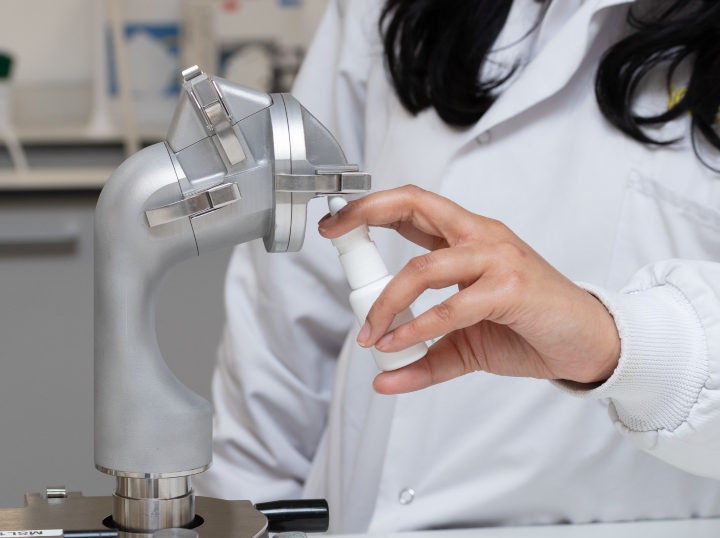
- Specialist OINDP testing including particle or droplet size to provide data to drive understanding of the delivered formulation and delivery of the drug from the inhalation device
Development & Stress Studies: Supporting degradation pathway understanding and early decision making
- Forced degradation testing
- Formulation stability testing
Environmental, Transport & Distribution Stability Studies: Protecting product quality throughout the supply chain
- Temperature cycling studies
- Freeze-thaw studies
- Shipping studies /transport studies
- Temperature excursion studies
Complex Product Stability Studies & Specialist Expertise: Ensuring stability, safety and performance of advanced products
- ICH Q5C: Stability testing of biotechnological/biological products
- ICH Q1B: Photostability Testing of New Drug Substances and Products
- Specialist expertise for OINDP stability programs
- Over 30+ years experience in extractables and leachables to help ensure your product container/packaging system demonstrates sufficient stability over the relevant lifecycle of your product
Our ICH Stability Storage Conditions
We have an extensive range of conditions spanning all the ICH stability zones and bespoke storage capabilities.
- Zones I (Temperate: 21°C/45%RH)
- Zone II (Subtropical: 25°C/60%RH)
- Zone III (Hot/Dry: 30°C/35%RH)
- Zone IVa (Hot and Humid: 30°C/65%RH)
- Zone IVb (Hot and Very Humid: 30°C/75%RH)
ICH Conditions:
- 21ºC / 45% RH
- 25ºC / 40% RH
- 25ºC / 60% RH
- 30ºC / 25% RH
- 30ºC / 35% RH
- 30ºC / 65% RH
- 30ºC / 75% RH
- 40ºC / 75% RH
- 40ºC / NMT 25%RH
- Cabinets 50 ºC, 57 ºC, 60 ºC
- Storage at 2-8ºC
- ULT storage -20ºC, -40ºC, -80ºC, -150 ºC
- ICH Photostability (ICH Q1B Photostability Options 1 & 2)
- Specialised conditions
- Freeze/thaw temperature cycling tests
Why Choose Intertek as your Stability Study Service Partner?
Over 30 years’ experience: We deliver programs with scientifically justified protocols, robust analytical development for stability indicating methods and extractables and leachables, efficient study management, flexible storage conditions which satisfy all regulatory criteria for your programs.
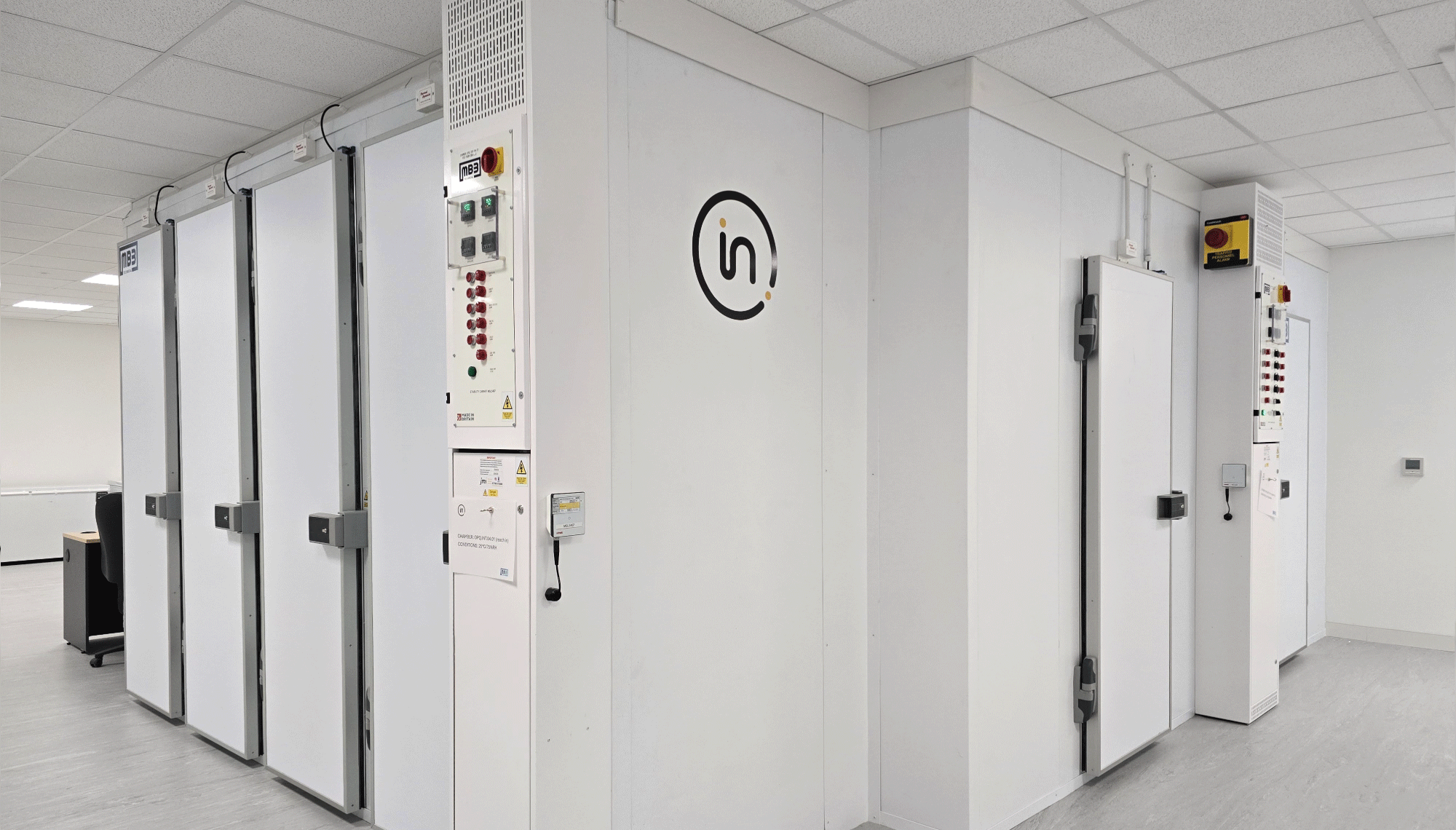
Global network: With a network of ICH stability storage facilities in the UK, US, India and Australia, we offer an extensive capacity and a range of ICH climatic zones including climatic walk-in chambers, cabinets and refrigerated covering all ICH stability storage conditions as well as freezer storage and ultra-low temperature storage.
We enable risk mitigation and program optimisation: Beyond just “testing”, our scientifically justified protocols, early stress testing, comprehensive reporting, monitored facilities and data trending helps you to avoid late-stage failures and loss of irreplaceable R&D data and strengthen regulatory confidence, reduce development risk and achieve a faster time to market.
Controlled ICH stability Facilities: Our ICH stability sites are fully controlled and monitored with back up chambers at each site. With 24-hour alarm systems with dedicated on call teams we can react rapidly to any excursions from storage conditions.
Experience across all product types: We work across all pharmaceutical dosage forms product types such as orally inhaled and nasal drug products (OINDP), biopharmaceuticals, consumer healthcare, medical devices or vaccines.
Talk to our stability teams now – let us design your ICH-compliant stability program today.
FAQs:
What is ICH stability testing?
In simple terms, the definition of a stability study is the process of generating evidence to demonstrate that a pharmaceutical product remains safe, effective, and within specification throughout its intended lifecycle under defined storage conditions. ICH stability testing involves a standardised approach defined by International Council for Harmonisation (ICH) guidelines to evaluate how the quality of a drug substance or drug product changes over time under the influence of environmental factors such as temperature, humidity, and light.
What studies are required for NDA submission?
For an NDA submission, stability studies must include long-term, accelerated, and, where necessary, intermediate studies conducted on at least three primary batches to support the proposed shelf life and storage conditions. These studies must use validated, stability-indicating methods and demonstrate that the drug substance and product maintain their quality, safety, and efficacy throughout the intended lifecycle under ICH-defined conditions.
What are ICH storage conditions?
ICH storage conditions are standardised temperature and humidity settings defined in ICH guidelines that are used to evaluate the stability of drug substances and products over time. These conditions, such as long-term (e.g. 25°C/60% RH), accelerated (e.g. 40°C/75% RH), and refrigerated or frozen environments, ensure consistent, regulatory-compliant assessment of product quality throughout its lifecycle.
What are the guidance documents for stability testing?
The Q1A (R2) guidance document is the parent document which covers stability testing of drug substances and products, providing a systematic approach to stability evaluation. The Q1B guidance addresses recommendations for photo stability testing, while the Q1C guidance provides recommendations on the data which should be submitted for the stability of new dosage forms. The Q1D guidance defines specific principles for situations in which bracketing or matrixing can be applied, with the Q1E guidance explaining how to use the stability data generated, detailing the steps necessary to propose a retest or shelf life, in registration applications. Finally, the Q1F guidance defines the storage conditions for stability testing in countries located in different climatic zones.
Related Links
RESOURCES
PRESS RELEASE: Intertek expands one of Europe's largest GMP stability storage facilities to meet growing customer demand
RECORDED WEBINARS
Stability Study Considerations Throughout the Drug Product Life Cycle
Outsourcing Pharmaceutical Stability Storage
WHITE PAPER DOWNLOAD
Outsourcing Stability Studies to Contract Laboratories: Keys To Success
An Introduction to Inhalation Drug Stability Studies

5th Annual Inhaled & Nasal Biologics | DNA Forum
24-25 September 2026
Cambridge, UK
Join us for a ground-breaking and insightful forum on inhaled and nasal biologics development: Two days of cutting-edge talks and networking opportunities with leaders in this complex area of inhaled medication and inhaled vaccine development.
LEARN MORE & REGISTER
Intertek Melbourn Laboratory
GMP Pharmaceutical Analysis and Formulation Expertise
Intertek Melbourn
Saxon Way, Melbourn
Herts, SG8 6DN
UK
Intertek Pharmaceutical Services
P.O. Box 470
291 Route 22 East
Salem Industrial Park
Whitehouse, NJ 08888
USA
Download our Sample Size and Pricing Guide (PDF)
Download our Pharmaceutical Testing brochure (PDF)
Download our Intertek Pharmaceutical Services Brochure
Download our Custom Extractables and Leachables Solutions Brochure
Pharmaceutical News & Events
- PRESS RELEASE: Intertek expands one of Europe's largest GMP pharmaceutical stability storage facilities
- PRESS RELEASE: Expansion of capacity with acquisition of new facility in Melbourn, Cambridge
- PRESS RELEASE: Intertek partners with CrystecPharma to advance formulation science and accelerate development for dry powder inhalers
- Blog: Optimising Quality in Pharma Supply Chains
- Discover our Audit Live Tool for direct access to our scheduled audits
- Extractables/Leachables Lab Tour - Request access
- Medical Device Extractables & Leachables Studies
- Rapid Determination of Low/Trace Level Benzene in Pharmaceutical Excipients and Finished Products